Clarity
We write down what we are doing, why we are doing it and what we are not doing. Decisions are recorded so they can be revisited.
About the company
WINGS AND WILDLIFE LIMITED is an independent technology company. We build and operate software, cloud and security systems for teams whose day-to-day work depends on their technology being reliable.
01 — Overview
The company was formed to provide long-term technical support to organisations that need serious software work but do not necessarily want to build a large in-house engineering team. Our work is grouped into four areas — software, cloud, security and consulting — and each engagement is scoped as a defined piece of engineering rather than an open retainer.
Everything we deliver is designed to be handed over cleanly. Clients receive working systems, documented architecture, operational runbooks and the context needed for their own teams to continue the work.
02 — Mission
We treat software as something that will be maintained by people who did not write it. Our mission is to leave every system we touch in a state where the next team can understand it, extend it and rely on it in production.
03 — Vision
We would like software engineering to feel less like a specialised, opaque activity and more like a normal part of how an organisation operates — measurable, accountable and predictable in cost.
04 — Core values
We write down what we are doing, why we are doing it and what we are not doing. Decisions are recorded so they can be revisited.
We prefer simpler systems, smaller scope and fewer moving parts. Complexity is added only when it earns its place.
We take responsibility for how our work behaves in production, including the parts that are inconvenient to discuss.
Client information is treated with care. We do not use client data outside the engagement or discuss projects without permission.
We plan for handover from the beginning, so that no client is dependent on our continued involvement to keep their systems running.
Estimates, risks and constraints are stated honestly, even when the honest answer is not the convenient one.

05 — Technical expertise
Client-facing engineers are also the people writing and operating the systems. There is no layer of account managers between the client and the practitioners responsible for the outcome.
06 — Client approach
Each engagement starts with a discovery phase where we spend time with the client's existing systems, stakeholders and constraints. The output is a written proposal describing the work, the sequence, the trade-offs and the expected outcomes.
During delivery, progress is communicated in short, regular written updates. Changes to scope, timeline or cost are discussed as they emerge rather than at the end of the engagement.
07 — Quality principles
Quality is judged by how the software behaves in production over time — including on days when things are not going well. Our engineering standards focus on observability, testability and recoverability rather than aesthetic code metrics.
08 — Innovation philosophy
We adopt new technology when it addresses a concrete problem in a client's system, not because it is currently popular. We are equally willing to argue for well understood, mature tools when they are the right choice.
09 — Security & reliability
Threat modelling, access control, backup strategy and incident response are part of the engineering plan from the first design review. We prefer to catch structural issues early, when they can be addressed cheaply, rather than discover them under production pressure.
10 — Team expertise
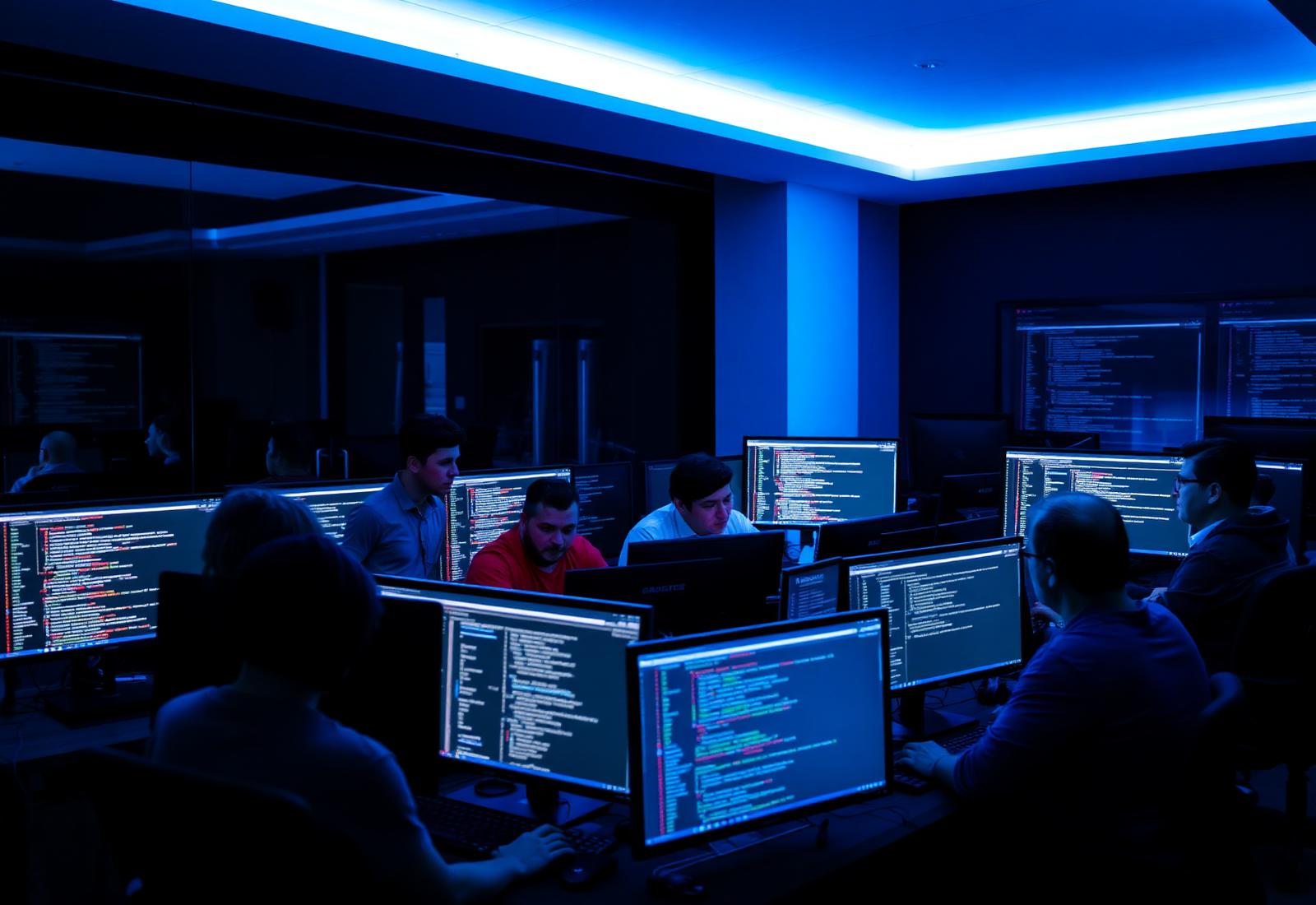
The company operates as a compact senior team. Contributors come from engineering backgrounds spanning backend systems, platform engineering, product engineering, security operations and technical consulting. Team composition on a given engagement is chosen to fit the work rather than assigned by availability.
11 — Long-term partnerships
The most useful engineering work often happens after the first release, when the system meets real users and real constraints. We design our engagements so that this phase is supported rather than abandoned.
12 — Business information